Annotated transcription · 8 min read
The Physics of Shock Waves: When Speed Outpaces Sound
Understanding the explosive phenomenon that occurs when objects break the sound barrier.
The Fundamental Nature of Shock Waves
Shock waves represent one of the most dramatic phenomena in fluid dynamics, occurring when an object or fluid moves faster than the speed at which information can propagate through that medium. At their core, shock waves are the result of a fundamental physical limitation: nothing can communicate faster than sound travels through a fluid.
To understand shock waves, we must first understand how fluids normally behave. At the molecular level, fluids exist as a continuum of particles. When an obstruction enters a flow, the particles immediately in front of it decelerate, creating a local increase in pressure. This pressure change doesn't stay localized — it propagates outward through the fluid as acoustic waves, traveling at the speed of sound. These pressure waves carry information about the obstruction, allowing approaching fluid particles to adjust their velocity, direction, and other properties before encountering the obstacle directly.
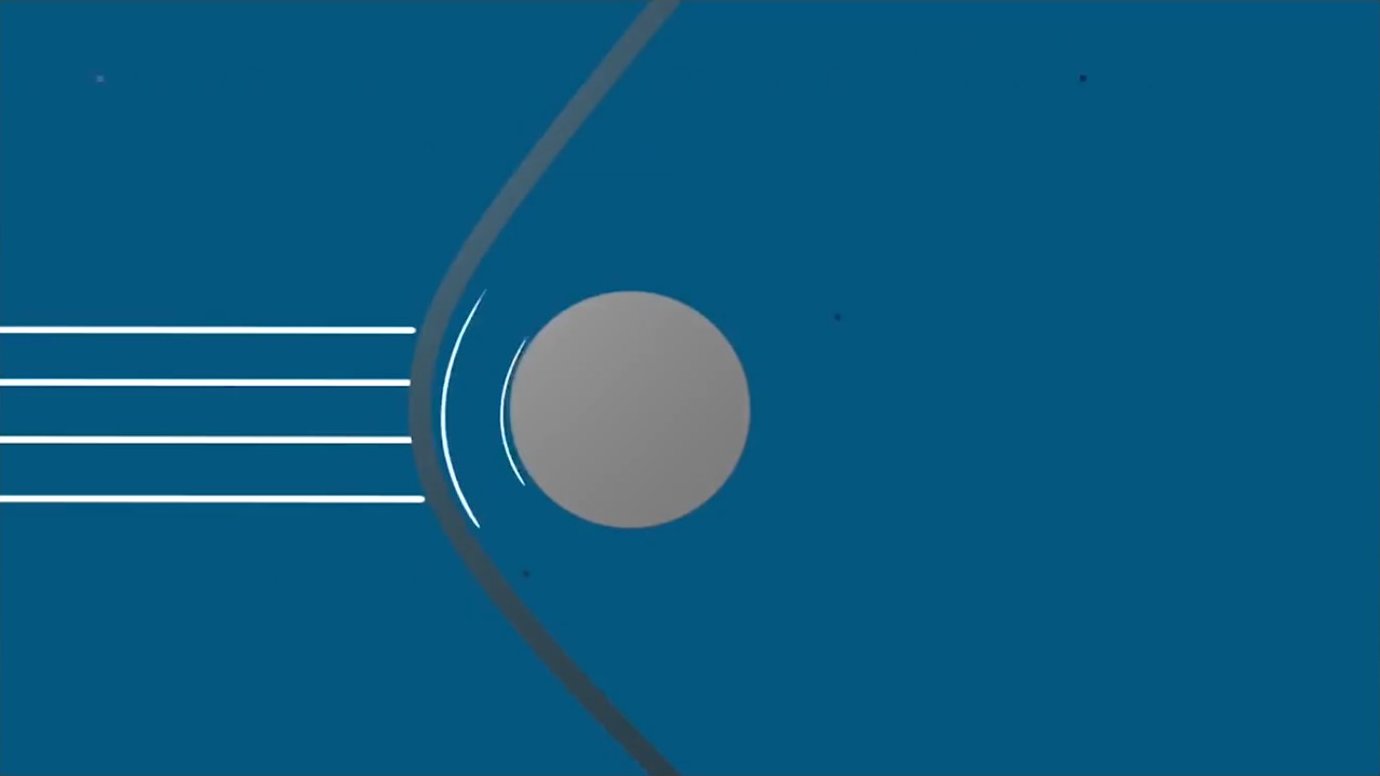
This advance-warning system works elegantly — until the fluid itself moves faster than these acoustic signals can travel. When that happens, fluid particles have no advance notice of the obstruction ahead. They cannot decelerate or adjust their trajectory until they physically collide with the object or with other particles that have already collided. This violent, sudden interaction creates what we call a shock wave: an extremely thin region — on the order of 200 nanometers — where fluid properties change almost instantaneously.
The Traffic Analogy
A helpful way to visualize information propagation in fluids is to think about traffic patterns. On a busy road, when one car suddenly brakes, the driver behind them receives visual information and reacts by slowing down. This reaction propagates backward through traffic as each successive driver responds to the car ahead, creating a wave of deceleration that moves opposite to the direction of traffic flow.

Now imagine those cars traveling so fast that drivers cannot process the visual signals quickly enough. Without adequate reaction time, collisions become inevitable. This scenario directly parallels what happens in supersonic flow: when the flow velocity exceeds the speed at which information can propagate, particles cannot adjust before impact, resulting in the violent compression we recognize as a shock wave.
Mach Number and Supersonic Flow
The transition from subsonic to supersonic flow hinges on a dimensionless parameter called the Mach number, defined as the ratio of flow velocity to the speed of sound in that particular medium. When the Mach number equals one, the flow velocity exactly matches the speed of sound. Below one, the flow is subsonic; above one, it's supersonic.
The significance of Mach 1 cannot be overstated. Below this threshold, pressure waves can propagate ahead of any disturbance, allowing smooth flow adjustments. Above it, these waves cannot outrun the flow itself, making shock formation inevitable when the flow encounters any obstruction or change in geometry.
Shock waves are also fundamentally irreversible processes. The extreme particle collisions that occur within the shock front generate entropy through viscous dissipation and thermal effects. Energy that was organized as directed kinetic motion becomes randomized as heat, a transformation that thermodynamics prohibits from spontaneously reversing.
Engineering Challenges and Solutions
In aerospace engineering, shock waves present significant challenges. They generate severe pressure fluctuations that cause structural vibrations and fatigue. They dramatically increase drag, reducing efficiency and limiting performance. For these reasons, engineers invest considerable effort in either avoiding shock formation or carefully controlling where and how shocks occur.
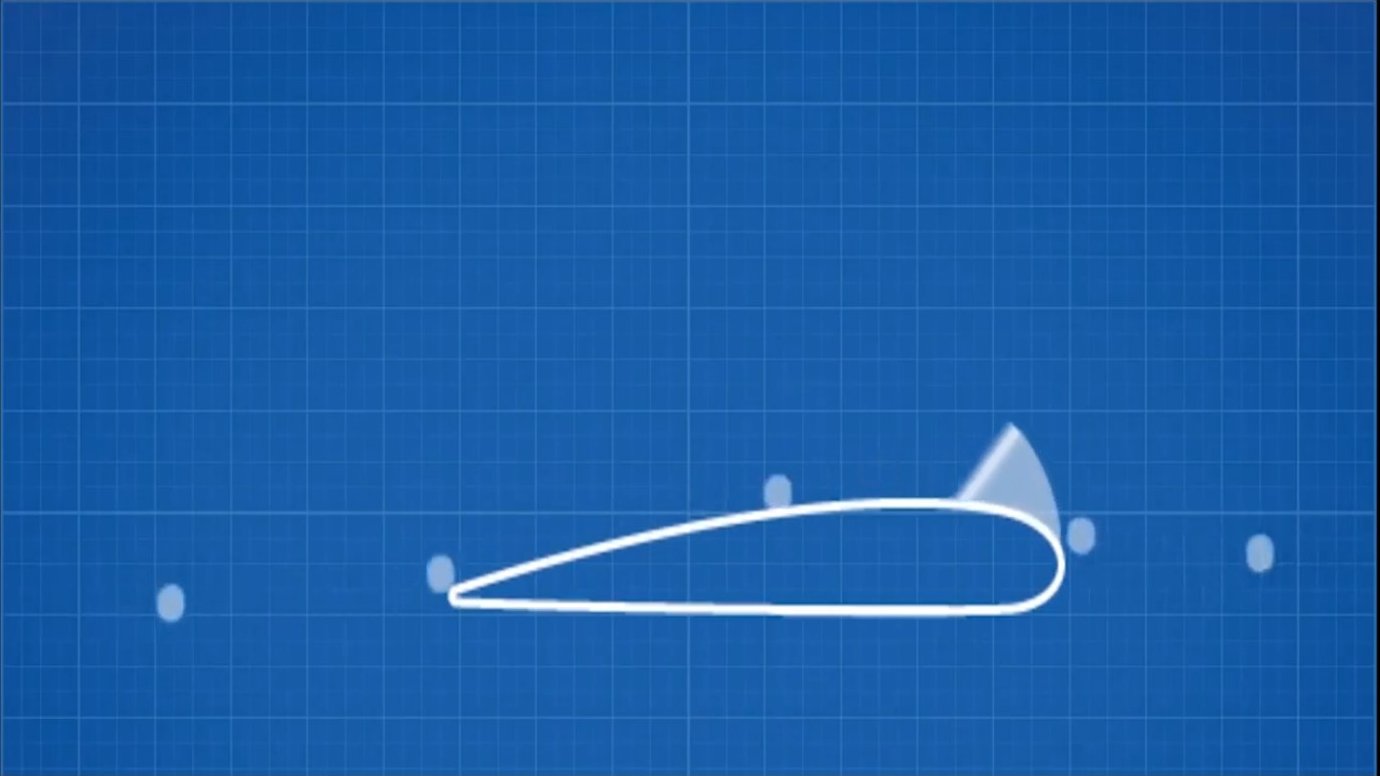
Even aircraft not designed to fly supersonically must contend with shock waves. Commercial airliners typically cruise below Mach 1, but local flow acceleration over wing surfaces can push velocities above the speed of sound in certain regions. These localized supersonic pockets generate shock waves that increase drag and can trigger flow separation, degrading lift and control.
Wing sweep — angling the wings backward relative to the fuselage — offers an elegant solution to this problem. When air flows over a swept wing, only the velocity component perpendicular to the wing's leading edge matters for determining whether the flow goes supersonic. By sweeping the wings, designers effectively reduce this perpendicular component, allowing the aircraft to fly faster before encountering shock-related problems. The oncoming air essentially sees a thinner wing profile, experiencing less acceleration as it passes over the surface.
This design principle explains why most commercial jets feature swept wings despite never intending to break the sound barrier. The sweep delays shock formation, expanding the safe operating envelope and improving efficiency at high subsonic speeds.
The Mach Cone and Sonic Booms
When a stationary object emits sound, the acoustic waves propagate outward as expanding spheres, uniform in all directions. As the source begins moving, these spheres compress in the direction of motion and stretch behind it. An observer ahead of the moving source perceives higher frequencies (shorter wavelengths) because successive wave crests arrive more quickly. Behind the source, frequencies appear lower as wave crests spread farther apart. This frequency shift is the Doppler effect, familiar from the changing pitch of passing sirens.
When the source accelerates beyond the speed of sound, something remarkable happens. The sound waves it emits can no longer propagate ahead — they're overtaken by the source itself. Instead, these waves pile up along a conical surface trailing behind the object. This cone, known as the Mach cone, represents the shock wave boundary. The cone's angle depends on the Mach number: faster speeds produce narrower cones.
The sonic boom — that thunderous crack heard when supersonic aircraft pass overhead — occurs when this shock cone sweeps over an observer's location. Before the cone arrives, no sound from the aircraft reaches the ground because all acoustic signals are trapped behind the shock. The moment the cone passes, all that accumulated acoustic energy arrives nearly simultaneously, producing the characteristic double boom (from the bow and tail shock waves).
Stealth Applications
The geometry of shock cones has interesting tactical implications. Since sound cannot propagate ahead of a supersonic aircraft, anyone on the ground receives no acoustic warning of its approach. Ground-based observers only hear the aircraft after it has already passed overhead and moved beyond the Mach cone that trails behind it.
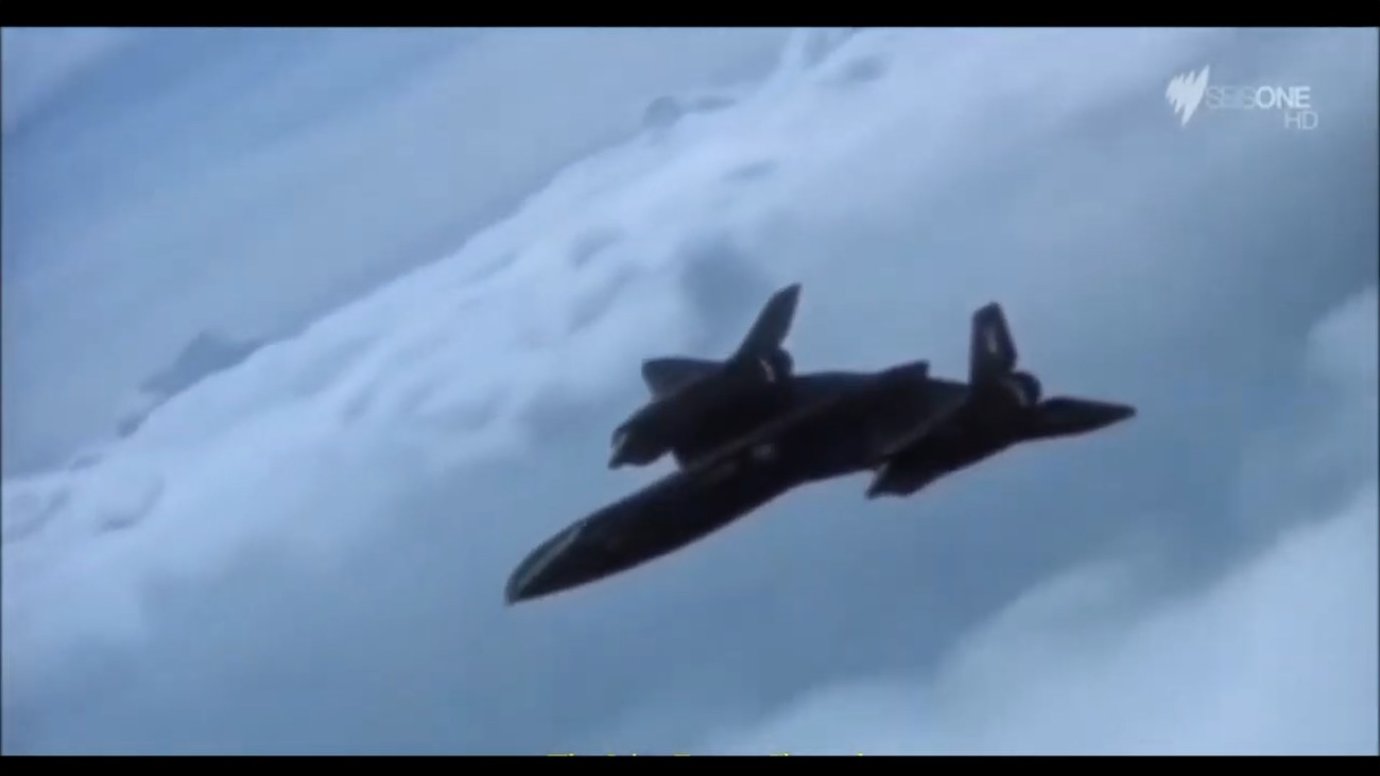
Military aircraft designers exploited this phenomenon when developing reconnaissance platforms like the SR-71 Blackbird, capable of sustained flight above Mach 3. At such speeds, the aircraft could penetrate defended airspace with impunity. By the time defenders heard the sonic boom and attempted to react, the aircraft had traveled miles beyond the location where they perceived the sound. Surface-to-air missiles, even when launched immediately, simply couldn't catch up to a target already receding at three times the speed of sound.
This acoustic stealth advantage, combined with high altitude and sophisticated electronic countermeasures, made the SR-71 effectively untouchable despite being one of the largest and fastest aircraft ever built. Speed became its own form of invisibility — not through hiding, but through moving faster than threats could respond.
Visualizing the Invisible
Shock waves produce dramatic changes in fluid properties — pressure spikes, density jumps, temperature increases — yet these changes remain invisible to the naked eye under most conditions. The shock itself is far too thin to see directly, and the property gradients, while extreme, don't inherently emit visible light.
Specialized optical techniques make these invisible phenomena visible by exploiting how light bends when passing through media of different densities. Regions with different densities have different refractive indices, causing light rays to change direction as they traverse density gradients. Schlieren and shadowgraph systems use carefully arranged optics to convert these subtle light deflections into visible intensity variations in an image.
In schlieren imaging, light that would normally travel straight through the test section gets deflected by density gradients. A knife edge or filter blocks some of this deflected light, creating shadows where density gradients exist. Strong gradients — like those across shock waves — appear as sharp, bright or dark lines. Weaker gradients show up as more subtle shading. The result is a photograph where invisible flow structures become vividly apparent.
These visualization methods have proven invaluable for research and education. They transform abstract concepts like shock standoff distance, oblique shock angles, and expansion fans into concrete, observable phenomena. What students might struggle to grasp from equations alone becomes immediately intuitive when they can actually see the shock structure.
Everyday Shock Waves
While supersonic aircraft represent the most dramatic examples of shock waves, these phenomena occur far more commonly than many realize. Any object accelerated beyond the local speed of sound will generate shocks, regardless of scale.

Bullets, for instance, typically travel well above Mach 1. The crack of a rifle is partially the explosive propellant, but the sharp report also includes the sonic boom from the bullet itself. High-speed photography reveals the shock cone trailing behind each projectile, miniature versions of the same structures formed by supersonic jets.
Even more surprisingly, whips generate shock waves. When a whip cracks, the handle's motion creates a wave that travels along the whip's length, accelerating as the whip tapers. By the time this wave reaches the thin tip, it's moving faster than sound. The characteristic crack is a tiny sonic boom, produced by a few inches of leather exceeding Mach 1.
These everyday examples demonstrate that shock waves aren't exotic phenomena confined to cutting-edge aerospace applications. They're fundamental physical processes that emerge whenever matter moves faster than information can propagate through its surrounding medium — a constraint that applies universally, regardless of whether we're discussing spacecraft or whips.
Key takeaways
- → Shock waves occur when objects or flows move faster than the speed at which pressure information can propagate through a fluid, preventing particles from adjusting before collision.
- → The Mach number — the ratio of flow velocity to sound speed — determines shock formation: above Mach 1, shock waves become inevitable at flow disturbances.
- → Across a shock wave, fluid experiences sudden increases in pressure, density, and temperature while Mach number decreases, all occurring across distances of only hundreds of nanometers.
- → Wing sweep in aircraft delays shock formation by reducing the effective velocity component perpendicular to the wing, allowing higher cruise speeds without supersonic complications.
- → Supersonic objects generate Mach cones — conical shock envelopes that trail behind them — producing sonic booms when these cones sweep over observers.
- → Optical techniques like schlieren imaging make shock waves visible by detecting how density gradients bend light, revealing otherwise invisible flow structures.
- → Shock waves occur at all scales, from supersonic aircraft to cracking whips, whenever local velocities exceed the speed of sound in the surrounding medium.