
Annotated transcription · 11 min read
The Engineering and Politics Behind Sputnik's Launch
How a simplified Soviet satellite beat America to orbit and ignited the Space Race.
The International Geophysical Year and Cold War Tensions
In the aftermath of World War II, the globe found itself divided between two superpowers locked in ideological standoff. Yet amid the atomic anxieties of the early Cold War, scientists proposed an ambitious collaborative vision: the International Geophysical Year, an 18-month scientific research program spanning from July 1957 to December 1958. Building on earlier polar studies from the 19th century, the IGY aimed to turn instruments of war—rockets—toward peaceful study of Earth's atmosphere, magnetic fields, and ionosphere.

For the Soviet Union and the United States, however, the IGY became less about cooperation and more about competition. Both nations publicly committed to launching artificial satellites as part of the program. The subtext was unmistakable: any nation capable of placing an object in orbit possessed the technology to deliver nuclear payloads across continents. What began as scientific collaboration transformed into a technological arms race with geopolitical stakes.
Soviet Satellite Development Under Secrecy
The Soviet satellite effort operated under extreme secrecy. Engineers and designers at the Special Design Bureau worked under titles rather than names—Chief Designer of Rocket Space Systems, Chief Designer of Rocket Engines, Chief Theoretician of Cosmonautics. This anonymity served dual purposes: it aligned with Soviet ideology that rejected individual credit for collective achievements, and it provided security against potential assassination by Western intelligence.

Leading the satellite project was Sergei Pavlovich Korolev, a brilliant rocket engineer whose career had been nearly destroyed by Stalin's Great Purge. Falsely accused of treason and sabotage, Korolev spent years in prison and labor camps, losing his teeth, breaking his jaw, and suffering a heart attack from malnutrition and abuse. Released near war's end, he threw himself back into rocketry with undiminished passion despite permanent health damage. His personal history of suffering under the same government he now served would remain unknown to the public for decades.
From Ambitious Object D to Simple Satellite
The original Soviet satellite design, codenamed Object D, was a sophisticated scientific laboratory weighing over 300 kilograms. Packed with instruments to study the ionosphere, cosmic rays, solar radiation, and Earth's magnetic field, it represented an ambitious first step into space. But as 1957 unfolded, Object D fell behind schedule. The pressurized shell proved difficult to engineer, communication systems remained unreliable, and the planned launch vehicle struggled with the payload mass.
Adding to the pressure, reports filtered in from the United States about imminent American satellite launches. In reality, the U.S. program faced its own political obstacles and delays, but Korolev had no way of knowing this. Every rumor felt like a ticking clock. When a missile launch from Cape Canaveral was mistakenly reported as a failed satellite attempt, the sense of urgency intensified.
In late 1956, Mikhail Tikhonravov—chief designer of the launch rocket and Korolev's friend—made a critical suggestion: what if they built something much lighter instead? After some hesitation, Korolev agreed. Object D was shelved in favor of a far simpler design.
Design of the Simple Satellite
The replacement satellite, designated PS-1 for Prosteishiy Sputnik (simple satellite), embodied minimalism. Its structure consisted of two aluminum alloy hemispheres, each 2 millimeters thick, sealed together with 36 bolts and resin O-rings. The completed sphere measured 58 centimeters in diameter—roughly the size of a beach ball—and weighed 83.6 kilograms.

Inside the hollow sphere sat three silver-zinc batteries constituting more than half the satellite's total mass at 51 kilograms. These powered a D-200 radio transmitter operating at dual frequencies: 20 and 40 MHz. By alternating between the two, the transmitter produced Sputnik's distinctive beep-beep signal—a sound that would soon captivate and terrify listeners worldwide.

Four antennas extended from the sphere in two pairs—one set 2.4 meters long, the other 2.9 meters—each tuned to one of the transmission frequencies. These would deploy after launch via spring mechanisms, flaring outward at 35 degrees from the body. Inside, a thermal control system monitored temperature via remote switches, automatically activating a cooling fan to circulate pressurized nitrogen when needed.
The satellite was pressurized to 1.3 atmospheres. If a micrometeorite punctured the hull, the sudden pressure drop would trigger alarms readable in the telemetry. To ensure visibility from the ground, Korolev insisted the shell be polished to a mirror finish. The satellite was kept spotless during construction, elevated on a velvet-draped stand. This wasn't mere aesthetics—Korolev understood that a reflective surface would make the satellite easier for observers to spot against the night sky, amplifying the propaganda value of the achievement.
Rocket Troubles and Launch Delays
Even with a simplified satellite ready, one major obstacle remained: the R-7 rocket itself had yet to achieve a successful test flight. The R-7, repurposed from intercontinental ballistic missile development, stood nearly 30 meters tall and burned a volatile mix of kerosene and liquid oxygen. Launch attempts throughout the spring and summer of 1957 ended in failure after failure.
The launch site at Baikonur Cosmodrome offered punishing conditions. Situated in the Kazakh desert steppe, temperatures swung from minus 40 degrees Fahrenheit in winter to 113 in summer. Natural water was scarce. Bored workers sometimes caught scorpions in jars and forced them to fight. Against this harsh backdrop, the first R-7 test in May lasted barely 90 seconds before a booster fire sent the rocket crashing back to Earth.
June brought another failure before the rocket even lifted off, grounded by a tropical rainstorm that flooded the area. July's attempt lasted only 32 seconds—a brief moment of euphoria at liftoff shattered as the vehicle began rolling uncontrollably, tearing off all four strap-on boosters. Debris scattered across the steppe. Each failure threatened not just Korolev's satellite ambitions but his position within Soviet society. His charges of treason had only been cleared that spring. Another major setback could prove catastrophic.
Then, in August, the fourth attempt succeeded. The R-7 ignited, climbed, and flew its full trajectory—6,500 kilometers to a target above the Kamchatka Peninsula. The team immediately raced to capitalize on the breakthrough. A satellite launch was scheduled for October 6th, then nervously moved up two days to guard against any surprise American launch.
Launch Night and Orbital Insertion
On October 2nd, 1957, Sputnik was installed inside its R-7 rocket, enclosed within the metal nose cone. The rocket rolled to the launchpad under enormous floodlights, escorted by Korolev and government officials. Fueling began early on the third. By evening, the pad blazed with light as the team made final preparations.

At 10:28 PM Moscow time, the R-7's engines ignited. The vehicle disappeared under a haze of smoke and flame, shaking the ground as 398 tons of thrust lifted it skyward. The ascent was not smooth—engine firing delays and excessive kerosene consumption nearly triggered an abort. But the rocket climbed, accelerating to 17,400 miles per hour.
Back on the ground, the launch team was blind. They had seen the rocket depart successfully, but reaching orbit was another matter entirely. Even if the R-7 achieved the necessary velocity, there was no guarantee the satellite itself had survived. The team could only wait. It would take just over 96 minutes for Sputnik to complete one full orbit and return within range of receiving stations.
Korolev waited in the command bunker with senior state commission members. Outside, a crowd gathered around a monitoring van parked near the launchpad, engineers clustered around speakers. Ninety-six minutes and seventeen seconds after launch, the loudspeakers crackled to life. A steady, rhythmic beeping filled the air—like a mechanical heartbeat from a distant metal creature. Sputnik had achieved orbit.
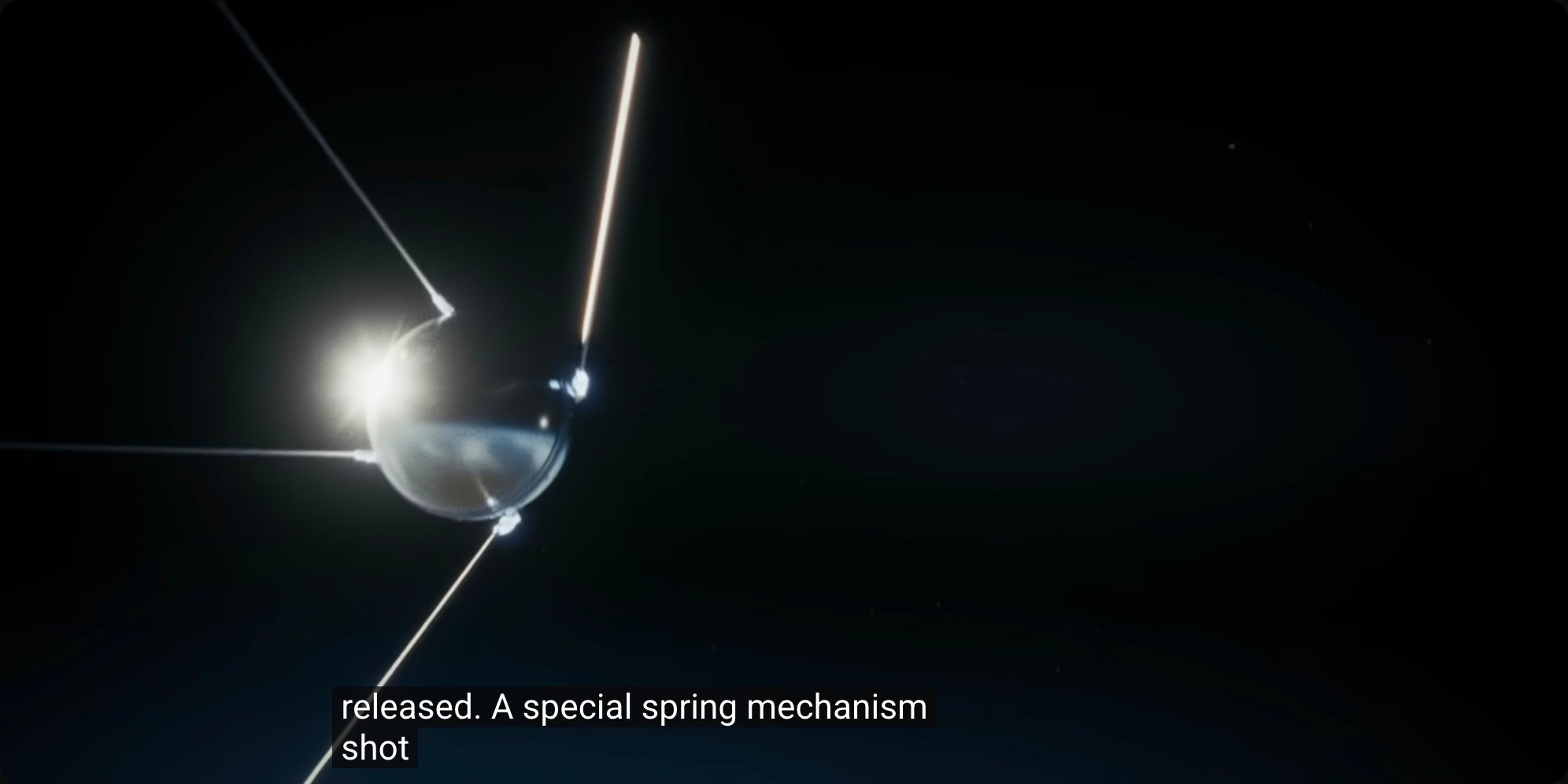
Upon separation from the rocket, sensors triggered the onboard battery system. The 1-watt radio transmitter powered up, along with thermal control systems. Sputnik transmitted once every three-tenths of a second on alternating frequencies, creating continuous coverage with no dead air. The satellite entered an elliptical orbit ranging from 215 kilometers at perigee to 939 kilometers at apogee—about 80 kilometers lower than planned but stable. It completed one orbit every 96 minutes, inclined 65 degrees to Earth's equator.
The launch team telephoned Soviet Premier Nikita Khrushchev with the news. His reaction was subdued—just another successful rocket launch, as far as he was concerned. He congratulated the engineers and went to bed. Nobody yet grasped what had just happened.
Global Reaction and Public Fear
By morning, Soviet radio announced the achievement. Sputnik had already passed over the United States twice during the night, entirely unnoticed. President Eisenhower received word only on the evening of October 4th while at his farm in Gettysburg, Pennsylvania. Initial reactions from the scientific community were positive—congratulations flowed to Soviet engineers on their surprising success. Amateur radio operators openly praised their Soviet counterparts over international channels.
But by Monday, awe had transformed into anger and fear. American newspapers ran headlines proclaiming Soviet technological supremacy. The launch came less than two months after the Soviets had successfully tested the world's first ICBM. The psychological impact was immediate and profound—if Soviet rockets could place a satellite in orbit, they could just as easily deliver nuclear warheads to American cities.

Both Eisenhower and Khrushchev were caught unprepared by the strength of public reaction. Khrushchev quickly changed his tune, exalting Sputnik as proof of Soviet scientific and technological dominance. Eisenhower publicly assured Americans he wasn't worried, noting that U.S. satellites would launch soon. Privately, however, he was quietly pleased—the Soviets had unwittingly established a precedent allowing satellites to pass over sovereign territory without permission, a precedent America would need for its own secret reconnaissance satellite program.
For the first two months, Sputnik traveled with a companion: the spent shell of its enormous R-7 rocket, 30 meters long and weighing 280 tons. Together they formed an alien sight in the sky. Sputnik's polished surface made it easily visible with the naked eye, especially at sunrise and sunset when sunlight reflected off its metal shell. But even more conspicuous was the persistent beeping that filled radio frequencies worldwide.
The Mysterious Beeping Signal
The satellite's radio signal could be picked up by amateur enthusiasts and professional stations alike. To listeners, the steady beeping was thrilling and terrifying in equal measure—the first audible voice from space, speaking in an unknown language. The effect was deeply ominous. Here was a Soviet craft passing overhead, transmitting something from beyond Earth's atmosphere.
American intelligence agencies scrambled to decode what they assumed must be an encrypted message. What information was being broadcast? What secrets traveled in those beeps? It took days before a Soviet delegate in Washington revealed the mundane truth: there was no encoded message at all. The radio signal existed purely for tracking purposes.
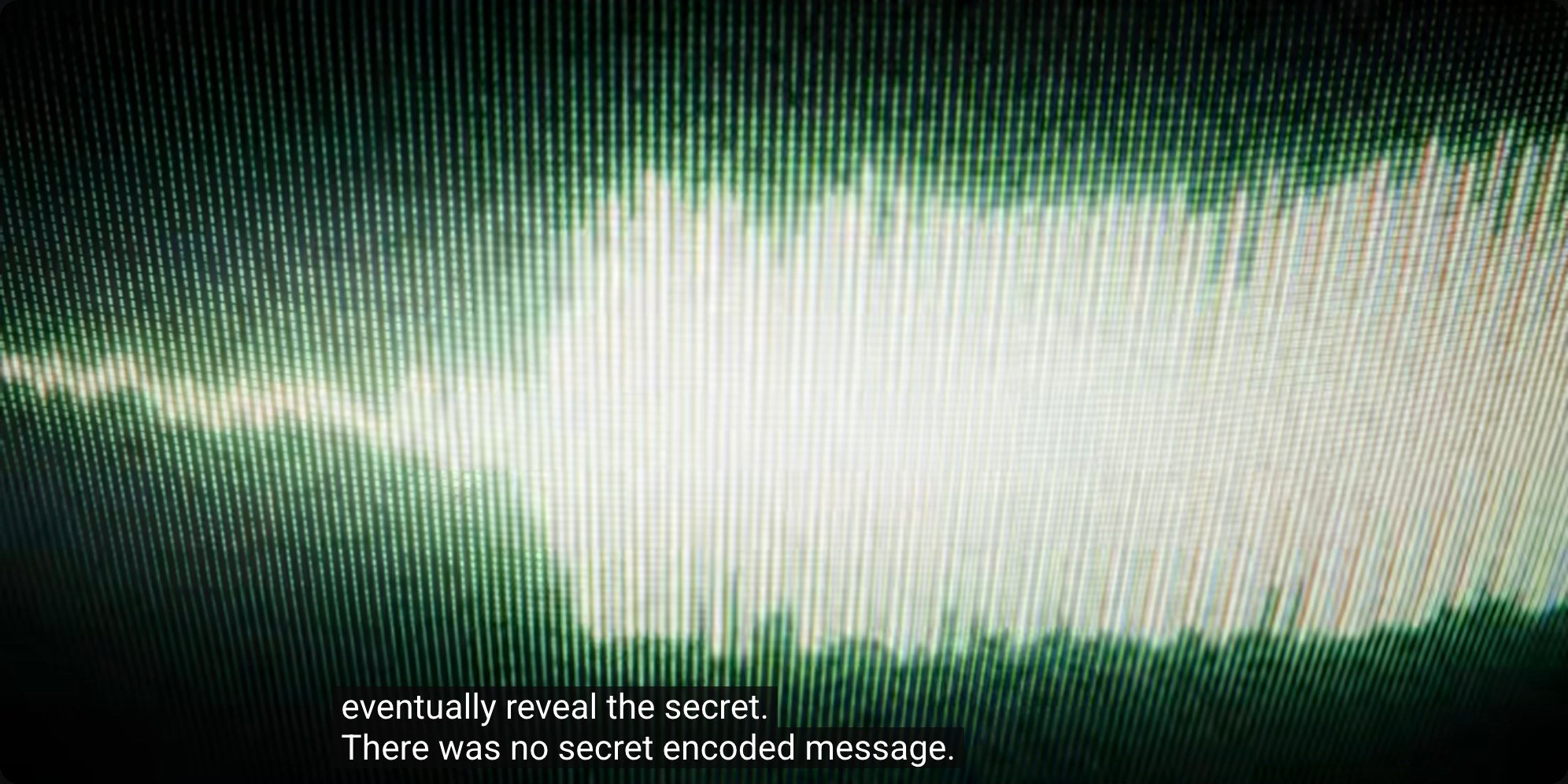
The technique relied on the Doppler effect. As Sputnik approached a receiver, the frequency of its transmission would shift higher; as it receded, the frequency shifted lower. By measuring this change, observers could calculate the satellite's velocity and trajectory. The alternating dual-frequency design ensured continuous transmission with no gaps. Simple, elegant, and entirely functional—yet to anxious Cold War listeners, it sounded like an extraterrestrial warning.
Scientific Value and Atmospheric Reentry
Despite its designation as the "simple satellite," Sputnik delivered significant scientific value. Its successful orbit validated theories in rocket propulsion and orbital mechanics. The survival of internal instruments proved pressurization concepts sound. Most importantly, the radio transmission demonstrated that communication through the upper ionosphere was viable—something not yet proven before launch.
As Sputnik gradually lost altitude, scientists gathered data on how atmospheric density changed at different elevations. The satellite's slow decay provided a natural experiment in aerodynamic drag at the boundary between space and atmosphere. This data would prove essential for future orbital mission planning.
The onboard batteries had been designed to last approximately two weeks. They exceeded expectations, continuing to transmit for 22 days before finally dying. By November, Sputnik was silent, but still visible—a bright, mute point of light falling slowly back to Earth.
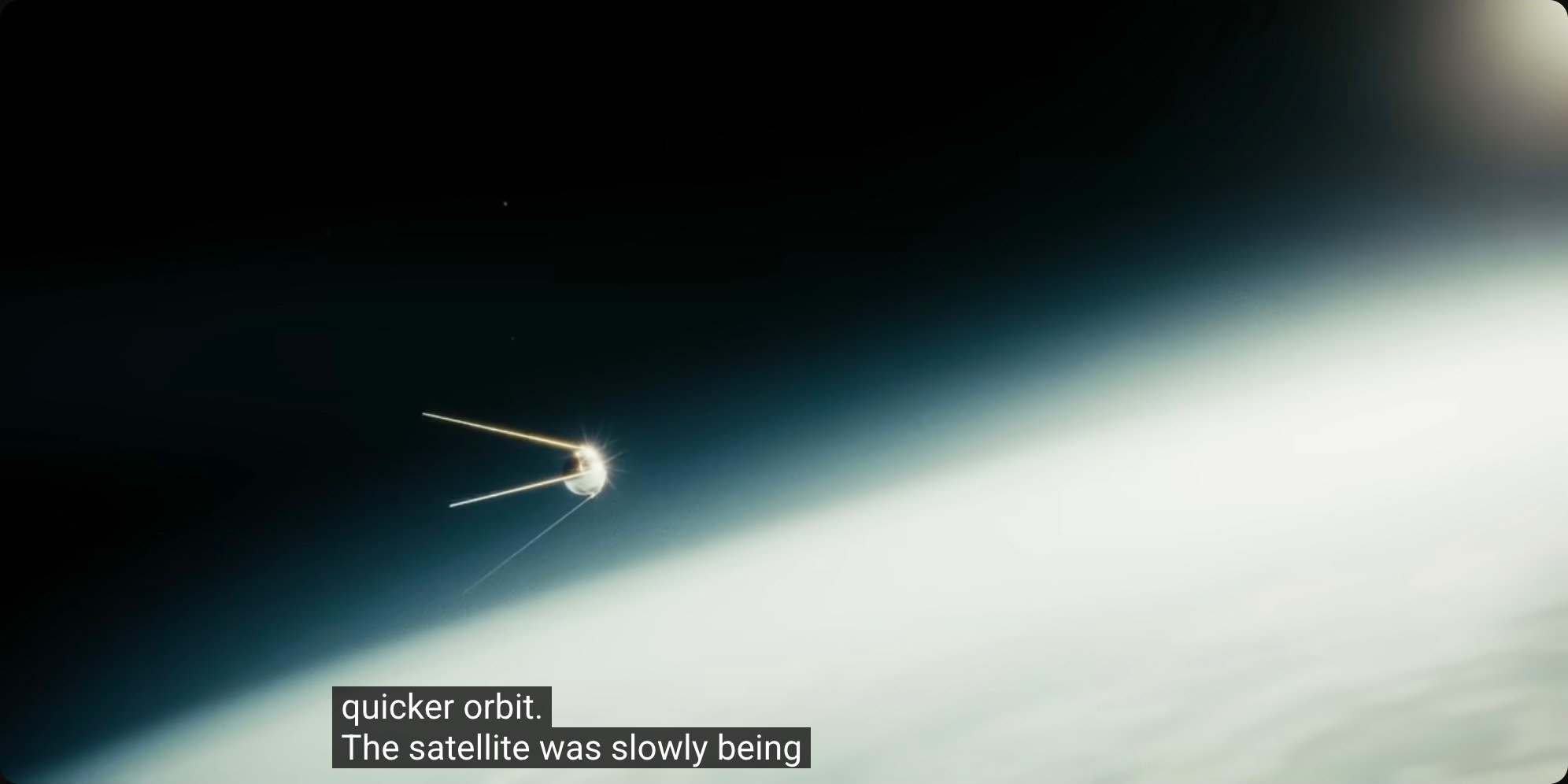
For 70 days, the satellite descended through thickening atmosphere. Each orbit grew shorter as friction bled away velocity. The metal shell began to glow with incandescent heat. On January 4th, 1958—three months after launch and after 1,440 orbits—Sputnik reentered Earth's atmosphere and burned up. It died as a bright man-made shooting star, melting and vaporizing at high altitude. No debris reached the ground.
Legacy and the Beginning of the Space Race
Sputnik's brief life ignited consequences far exceeding its modest technical capabilities. Though hastily designed as a replacement for a more sophisticated satellite, it weighed eight times more than anything the United States had been preparing. More importantly, it demonstrated that Soviet rockets were powerful enough to send payloads anywhere on Earth—including nuclear warheads to American cities.

By early 1960, the R-7 rocket entered military service equipped with nuclear warheads. In America, Congress responded with the Space Act of 1958, establishing NASA and consolidating civilian space efforts. The International Geophysical Year concluded in December 1958 as a resounding scientific success, having ushered in an entirely new era of technological competition.
Korolev continued leading Soviet space efforts through the 1960s. Sputnik 2 followed quickly, carrying the dog Laika. Object D finally flew as Sputnik 3. In 1961, Yuri Gagarin became the first human in space, cementing Soviet leadership in the early Space Race. But Korolev's personal journey ended abruptly in 1966 during what should have been routine surgery. Hemorrhaging began during the procedure. Doctors attempted to intubate him, only to discover that his jaw—broken decades earlier in the gulag—had healed so poorly that the breathing tube could not pass. He died without regaining consciousness at age 59.
The Space Age Korolev helped launch continued accelerating: humans walking on the Moon, probes visiting distant planets, and eventually permanent human presence in orbit. All of it traces back to that October night in 1957 when a polished metal sphere the size of a beach ball began circling Earth, speaking in simple beeps that announced a new chapter in human history.
Key takeaways
- → Sputnik was a last-minute replacement for a much more sophisticated satellite (Object D) that fell behind schedule due to technical challenges and pressure to beat American efforts.
- → The satellite's design was minimalist: a 58-centimeter polished aluminum sphere weighing 83.6 kg, with most of its mass devoted to batteries powering a simple radio transmitter.
- → Sputnik's distinctive beeping signal was not an encoded message—it was a tracking beacon that used radio Doppler shifts to allow calculation of orbital trajectory.
- → The satellite's spherical shape was chosen for thermal management, distributing solar heating evenly to protect temperature-sensitive electronics rather than for aerodynamic reasons.
- → Sergei Korolev, the chief designer behind Sputnik, spent years in Soviet labor camps on false treason charges, suffering permanent injuries that would eventually contribute to his early death in 1966.
- → Sputnik's successful launch established a crucial precedent: satellites could pass over sovereign nations without permission—something both superpowers would exploit for reconnaissance satellites.
- → The satellite transmitted for 22 days before battery failure, remained visible for three months, and burned up on reentry after 1,440 orbits, having initiated the Space Race and fundamentally shifted Cold War geopolitics.