Annotated transcription · 9 min read
Electronic Warfare Against Drones: How Radio Jamming Protects the Front
Modern battlefield defense relies on invisible electromagnetic shields that disable enemy drones before they reach their targets.
The Shield-and-Sword Dynamic
Electronic warfare represents an ongoing technological arms race where offense and defense constantly leapfrog one another. Attack drones—both FPV units and reconnaissance platforms—constitute the offensive weapon, while radio electronic countermeasures form the defensive shield. This shield, however, consistently lags behind the sword, with defensive systems rarely anticipating threats before they emerge.
Enemy drone operators continually adjust their radio frequencies to evade jamming. When FPV drones begin operating on a new frequency band, defensive forces often lack the equipment to counter it immediately. The technology exists to address larger reconnaissance drones, but against agile quadcopters the game remains reactive rather than proactive.
How Radio Jamming Disrupts Drone Control
Electronic countermeasures work by overwhelming the control channels that connect a drone to its operator. Imagine a person speaking at normal volume while someone next to them shouts and sings simultaneously—the original voice becomes unintelligible. Radio jamming operates on the same principle, flooding specific frequency bands with high-power noise that drowns out legitimate control signals.
Enemy FPV drones typically operate in the 700-900 MHz range. On a given day, operators might launch all their units within the 700-805 MHz band. Defensive systems identify and jam these frequencies. The next day, adversaries shift to 850-950 MHz. Operators must detect the new frequency and reconfigure their jamming equipment accordingly. This cat-and-mouse game continues throughout the conflict, with both sides adapting to the other's latest moves.
Some jamming systems can blanket an entire frequency range with sufficient power to disable any drone operating within it, regardless of the exact channel. When such systems activate, whether facing a swarm or individual FPV drones, all hostile aircraft simply fall from the sky.
Echelons of Electronic Defense
Electronic countermeasures deploy in three distinct layers, each serving a specific tactical purpose. First-echelon systems are compact, portable jammers designed for trench warfare. These devices protect individual positions within a 50-100 meter radius, depending on their output power. Soldiers can easily carry and deploy them at fighting positions, creating localized protective bubbles.
Second-echelon equipment was originally engineered to counter large fixed-wing reconnaissance drones like the Orlan or Supercam. However, battlefield necessity has driven operators to employ these more powerful systems against FPV threats as well. The adaptation has proven surprisingly effective, with second-echelon jammers successfully protecting broader areas when positioned strategically.
Third-echelon systems represent the most powerful—and least mobile—assets. High output power requires substantial size and weight, making these platforms unsuitable for forward deployment near the contact line. Instead, they operate from rear positions, focusing on long-range reconnaissance drones rather than tactical FPV units. Their immobility limits their utility against fast-moving quadcopter threats.
Directional Versus Omnidirectional Coverage
Jamming systems employ two fundamental architectural approaches: omnidirectional dome coverage and focused directional beams. Dome systems create a protective hemisphere over a defined area—a square sector that shields everything beneath it. These installations excel at defending static positions or covering logistical movements along predictable routes.
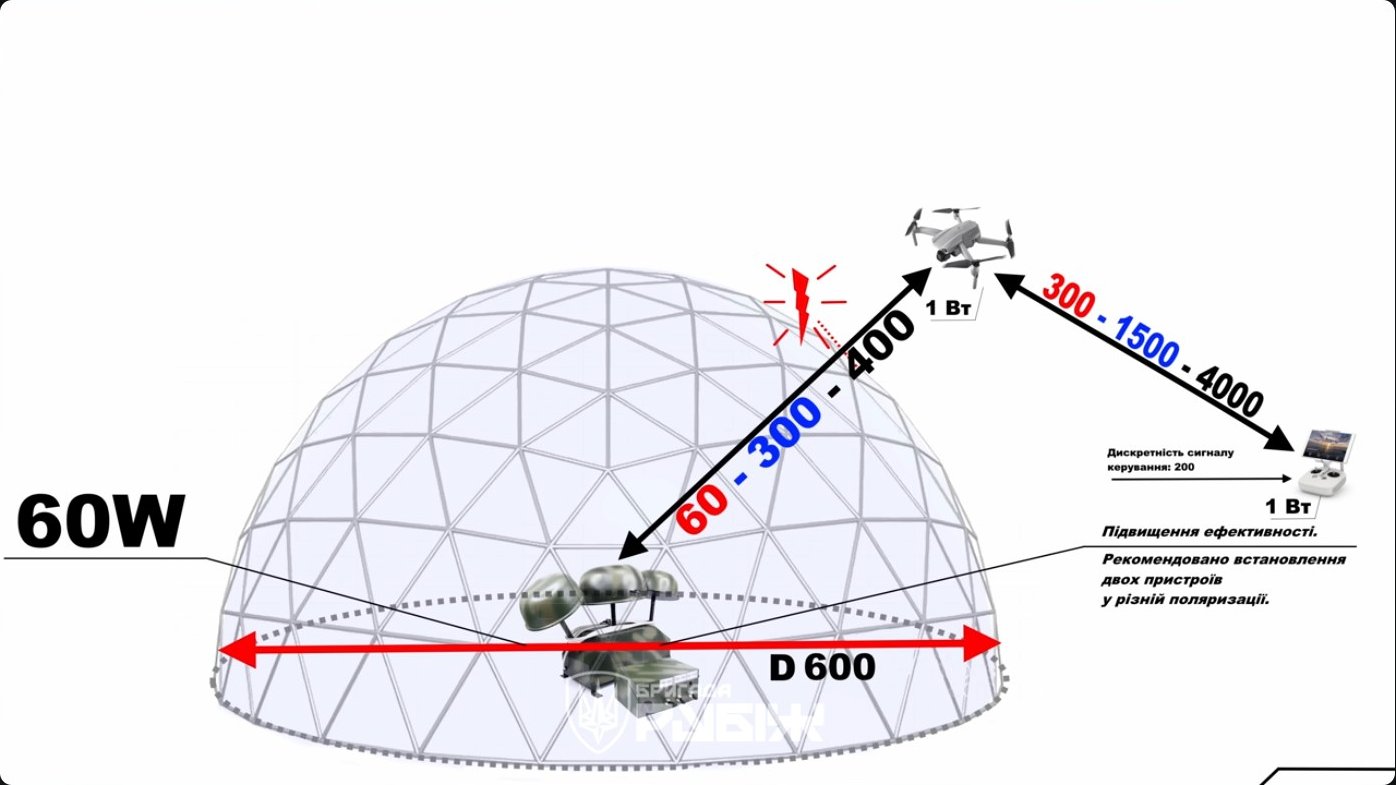
Directional systems concentrate jamming energy into a narrow beam that can engage targets at significantly greater ranges. When a hostile drone appears beyond the effective radius of dome coverage, operators switch to directional mode and 'burn through' the target's communications with focused high power. Directional systems also prove necessary when dome generators lack sufficient strength to overcome a particular threat—raw power compensates for coverage area.
Operations and Monitoring
Electronic warfare operations involve both remote command posts and forward equipment positions. Specialists at control consoles manage the jamming systems, making real-time decisions about frequencies, power levels, and engagement priorities. This represents one face of the operation.

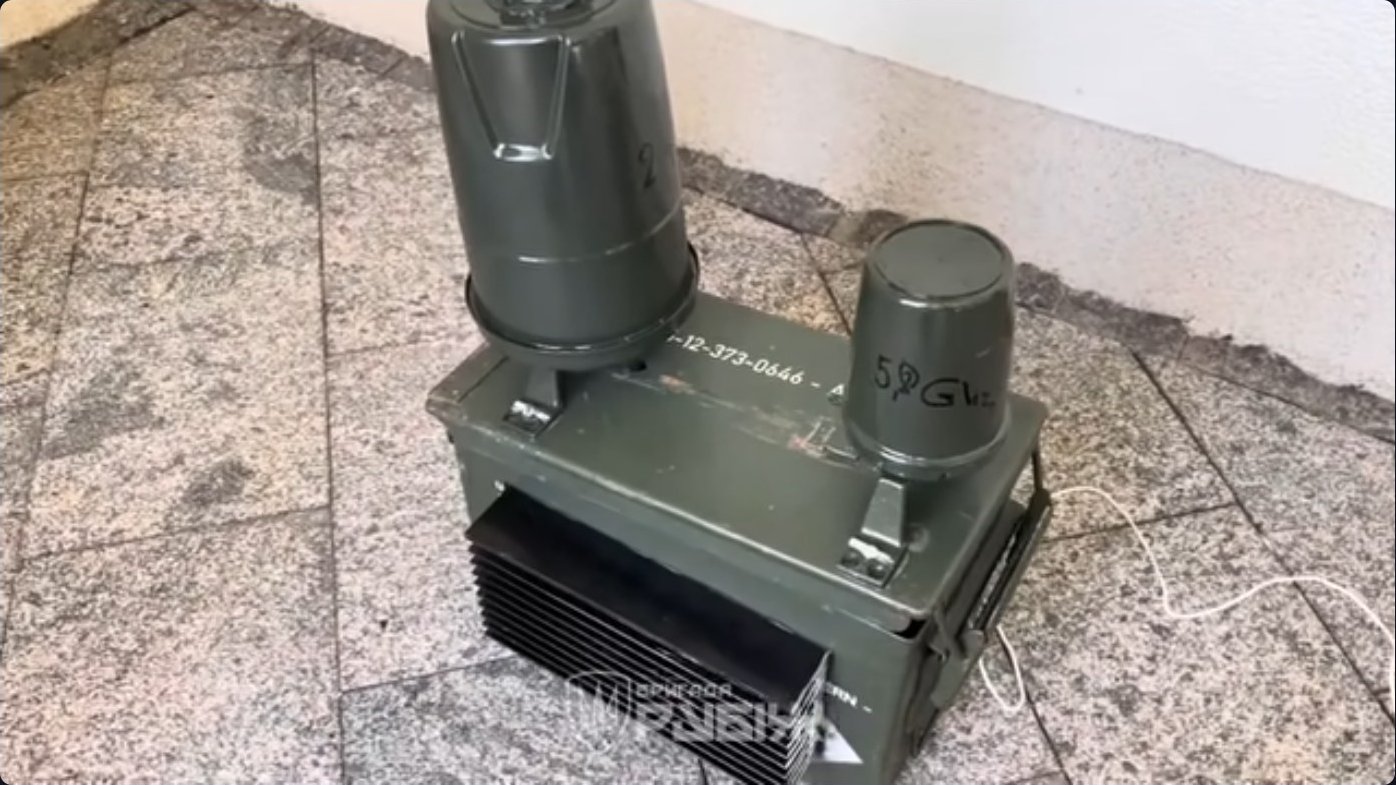
Meanwhile, technicians at forward sites maintain the physical jamming equipment—arrays of antennas and transmission units that might appear as nondescript containers to casual observers. Camouflage and deception prove critical, as revealing the nature or location of jamming systems invites targeted strikes. Operators deliberately obscure their equipment's function and appearance to prevent enemy identification.
Console specialists monitor feeds from multiple sources simultaneously. One display shows reconnaissance drone tracks, another presents data from radio intercept stations. Electronic warfare units typically defend multiple sectors simultaneously, requiring operators to prioritize threats and allocate jamming resources dynamically.

Intercept operators monitoring enemy communications can confirm successful jamming when they observe adversaries reporting disabled drones. These confirmations validate that someone has been spared from an FPV strike, preserving health or life through invisible electromagnetic intervention.
Operational Impact and Effectiveness
The value of electronic countermeasures becomes starkly evident when systems go offline. During one incident, a power supply failure forced a major jamming installation to withdraw for repairs. Troops who had grown accustomed to protection from their electromagnetic umbrella immediately reported deteriorating conditions. FPV strike frequency increased noticeably in the sector. Though electronic warfare units operate with little fanfare, their presence—or absence—profoundly affects frontline conditions.
Units that know they operate under jamming coverage develop confidence to conduct their missions more effectively. The psychological impact of reliable protection should not be underestimated. Conversely, when protective systems depart, even briefly, the change is immediately felt across the defended area.
Health Considerations and Safety Protocols
Radio-frequency jamming equipment emits electromagnetic radiation that poses health risks with prolonged exposure. Regardless of system type—first, second, or third echelon—operators must maintain appropriate distance and shielding. Higher power output correlates with greater biological hazard.
Forward technicians who maintain equipment at position sites remain protected because bunkers and earthworks shield them from RF emissions. The soil and fortifications that protect against kinetic threats also block electromagnetic energy. No fatalities have occurred from RF exposure in these operations, but prudent safety protocols prevent long-term health consequences.
Training and Expertise Development
Early in the formation of specialized electronic warfare units, critical personnel shortages forced some operators to learn their craft entirely in the field. Equipment deployed to combat zones with minimal operator training—soldiers received instruction manuals and essentially apprenticed themselves on the job. While this approach proved functional under desperate circumstances, it represents far from ideal conditions for mastering complex technical systems.
Contemporary practice emphasizes formal training courses that can produce competent operators within approximately one month. Specialized training centers now offer certification programs that provide structured education rather than trial-by-fire learning. However, initial training represents only the foundation.
Effective electronic warfare specialists must commit to continuous education. The field evolves rapidly, with adversaries developing new techniques and frequencies while friendly forces field updated equipment. Operators need to track developments across the entire domain, remaining current on emerging technologies and countermeasures.
Ideal candidates demonstrate aptitude for technical systems, willingness to study independently, manual dexterity, and adaptability. Electronic warfare units actively seek personnel who exhibit these qualities, as the field offers numerous unfilled positions for qualified specialists committed to ongoing professional development.
Key takeaways
- → Electronic warfare against drones works by overwhelming control frequencies with high-power radio noise, severing the link between operator and aircraft.
- → Defensive systems deploy in three echelons: portable trench-level jammers, medium-power tactical systems, and powerful rear-area platforms for long-range reconnaissance drones.
- → Dome coverage protects defined areas while directional beams engage specific targets at extended ranges with concentrated power.
- → The electronic warfare battlefield involves constant adaptation as both sides shift frequencies to counter the other's latest moves.
- → Radio-frequency jamming equipment poses health risks requiring proper distance, shielding, and safety protocols during operation.
- → Effective electronic warfare operators require formal training followed by continuous education to keep pace with rapidly evolving threats and technologies.
- → The presence or absence of jamming coverage profoundly affects combat conditions, with units experiencing immediate changes when protective systems go offline.